STEMTEC AI & Robotics Pvt. Ltd.
AI & Robotics Intern — Indoor Autonomous Mobile Robot
Worked on the software stack of an indoor autonomous mobile robot, mostly on the sensor validation and data analysis side rather than pure hardware work. I ran time series error analysis on Extended Kalman Filter telemetry at 15 Hz against raw encoder logs across repeated ground truth trials, which brought mean spatial error down 60 percent and angular error down about 69 percent. Also worked with high frequency LiDAR data, close to 3,600 points a second, to validate a filtering approach for obstacle detection, getting it to 95 percent accuracy across 20 stress test trials while keeping latency under 50ms. A good chunk of the work was really about designing solid test trials and making sure the numbers I was reporting actually held up under scrutiny.
Mean spatial drift cut from 0.45 m → 0.18 m across 10 m ground-truth trials via 15 Hz EKF.
Rotational yaw orientation error reduced from 7.8° → 2.4° fusing IMU + encoder odometry.
Collision-free obstacle traversal across 20 randomized physical stress tests (19/20 successful passes).
Sub-50 ms end-to-end control latency ingesting ~3,600 LiDAR points/sec at 10 Hz frequency.
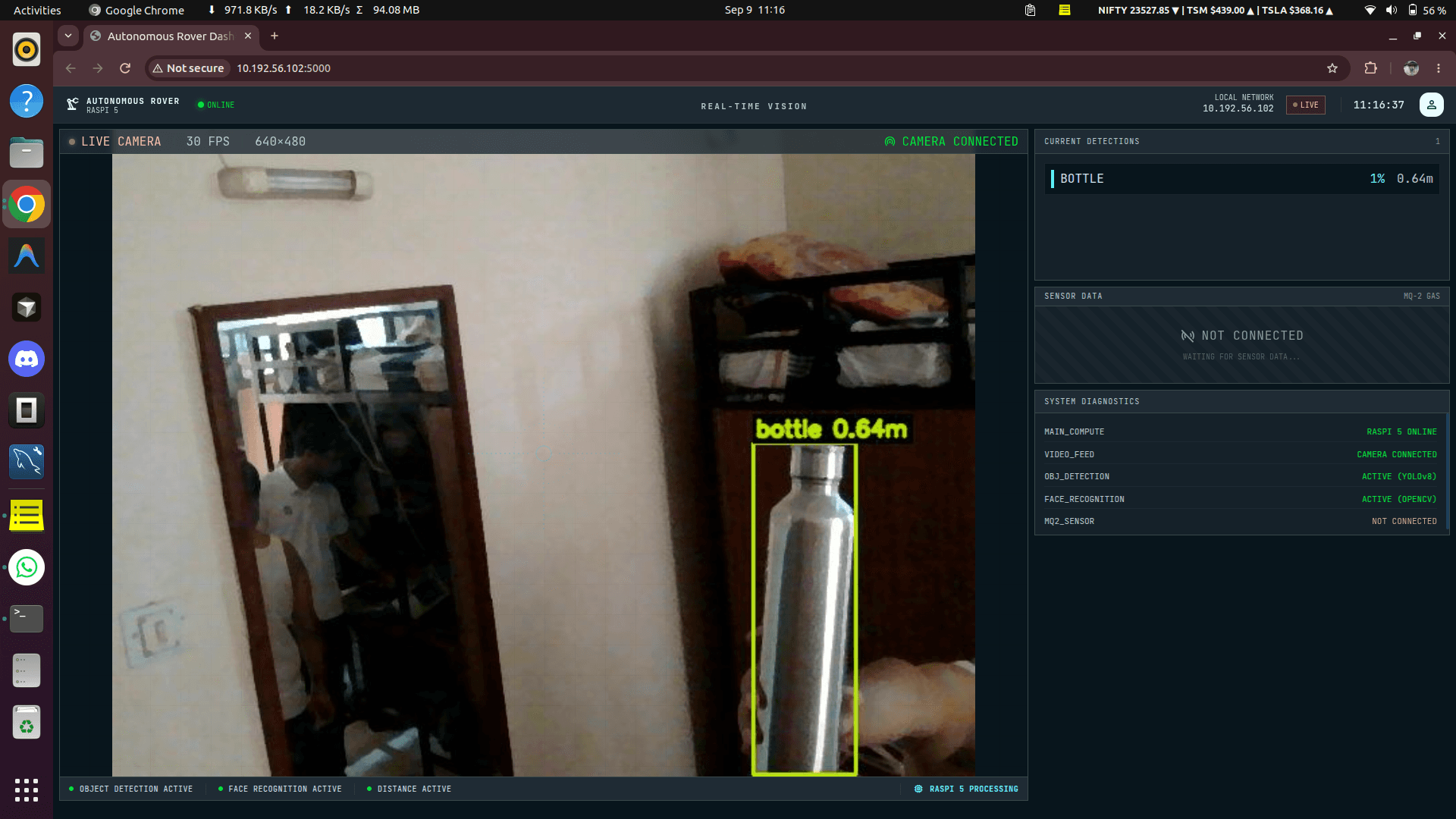
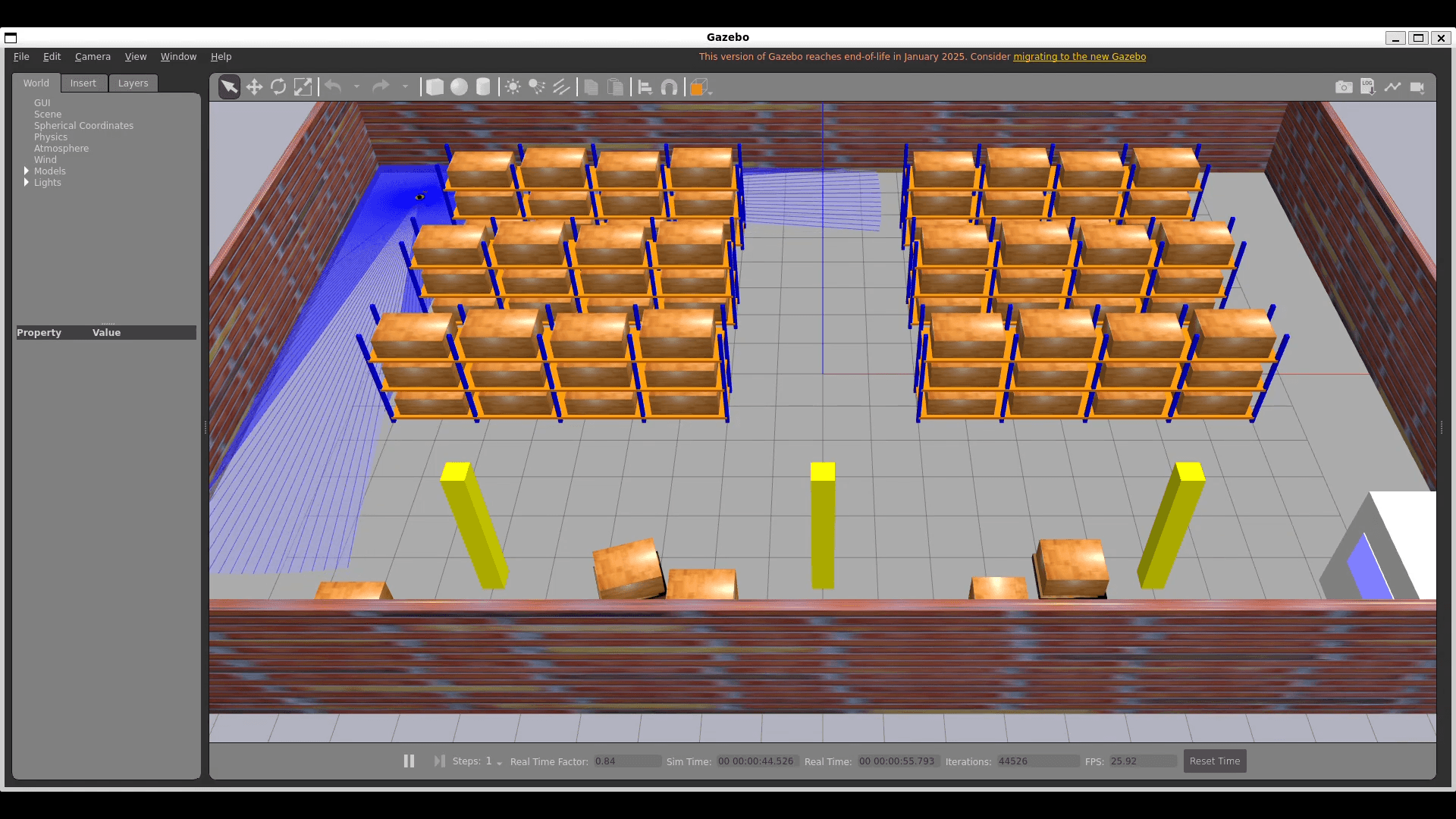
Hardware & Simulation Video Feeds
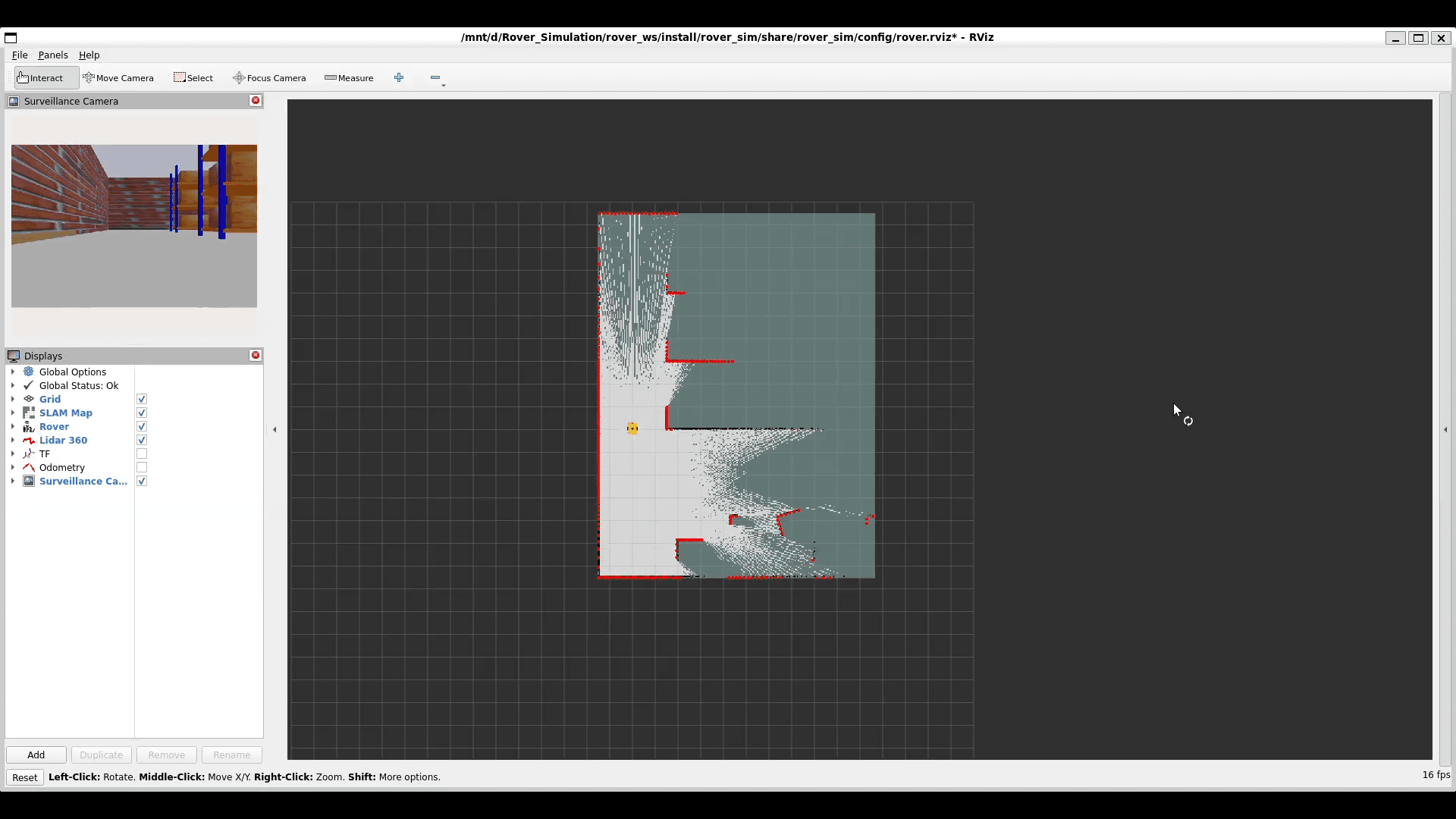
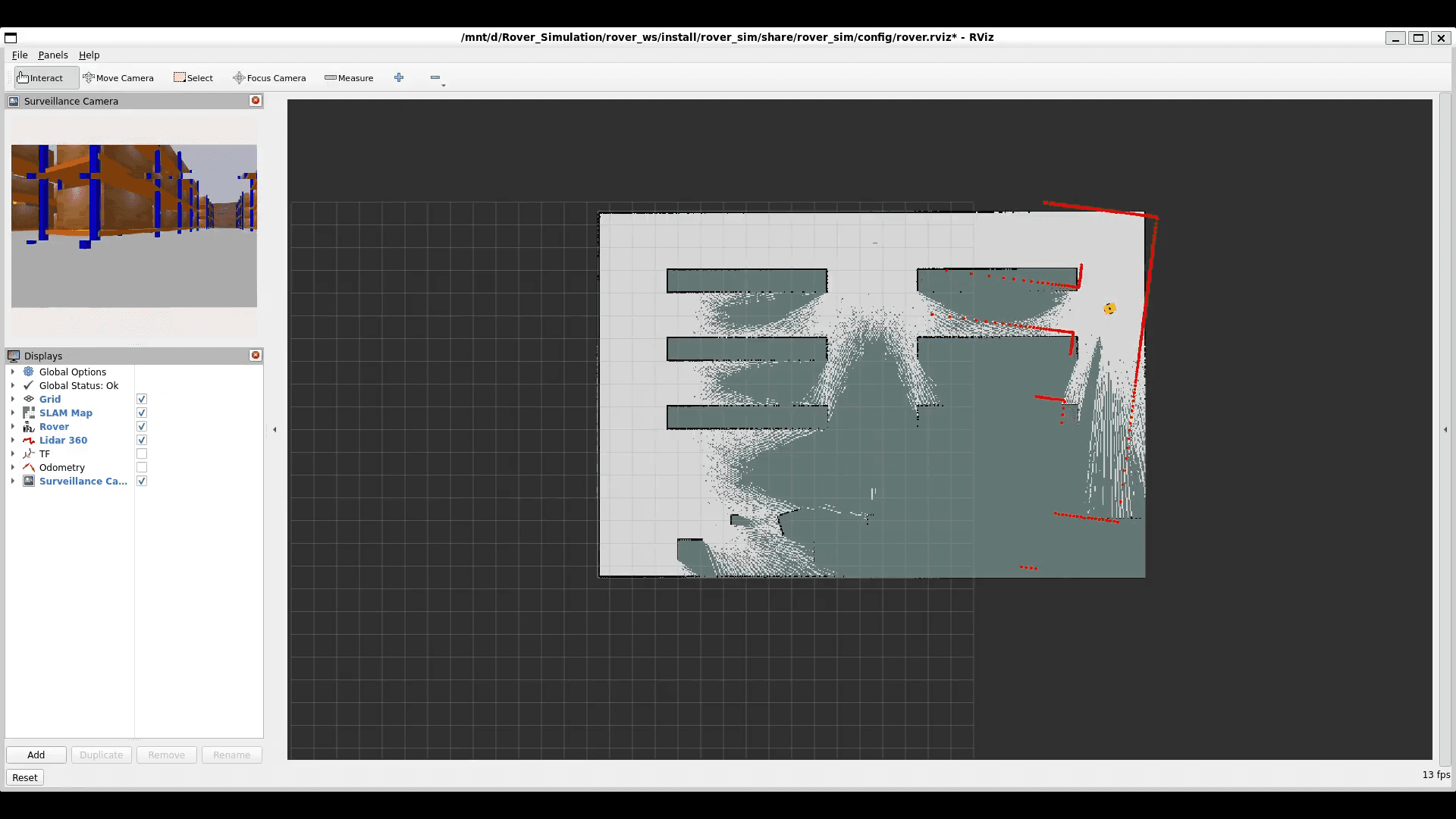
Live recordings from physical chassis validation trials and ROS 2 simulation suites.
ROS 2 Software Architecture
Modular publisher/subscriber nodes implemented in Python 3 under the ROS 2 Jazzy framework.
State-Space Estimation
Fuses asynchronous 50 Hz wheel encoder odometry (/odom) with 30 Hz 6-DOF IMU acceleration and gyro telemetry (/imu/data). The continuous Extended Kalman Filter suppresses cumulative wheel slip drift by 60% on low-friction flooring.
Frontal Sector Slicing
Subscribes to 360° 2D LiDAR range data on /scan. Employs circular modulo array-indexing to isolate a 60° forward cone (±30° from bore). If range minimum falls below the 0.75 m safety threshold, an emergency angular override is injected into the velocity multiplexer.
Patrol Trajectory Loop
Maintains timed autonomous patrol cycles between predefined coordinate waypoints. Publishes linear and angular velocity commands to /cmd_vel at 0.4 m/s nominal traverse velocity with smooth ramp deceleration curves on waypoint approach.
Physical Hardware vs Gazebo Benchmark
Telemetry comparison between digital twin simulation runs and physical laboratory hardware trials.
| Evaluation Metric | Raw Baseline (No Filter) | Gazebo Simulation | Physical Robot Chassis | Net Improvement |
|---|---|---|---|---|
| Mean Spatial Drift (10m) | 0.45 m | 0.08 m | 0.18 m | -60.0% drift |
| Angular Heading Error | 7.8° | 1.1° | 2.4° | -69.2% error |
| Obstacle Avoidance Rate | 65% (13/20) | 100% (20/20) | 95% (19/20) | +30.0% success |
| End-to-End Latency | 110 ms | 22 ms | 46 ms | Sub-50 ms target |
Telemetry & Simulation Evidence
Click any screen capture below to inspect full-resolution ROS 2 graphs, costmaps, and terminal telemetry.